What Lives in a Day Pack: A Simple Kit for Mountain Mornings
A day pack is a small argument with yourself. Everything you add is comfort you might need and weight you certainly carry. After enough mornings on a hill, most walkers arrive at roughly the same short list, and it fits in twenty litres with room to spare.
Three layers, no more
You want something that moves sweat, something that holds warmth, and something that blocks wind. That is a base layer you are already wearing, a light fleece or insulated jacket, and a shell. A fourth layer is usually a sign that one of the first three is not doing its job.
Keep the warm layer near the top of the pack, not the bottom. You will want it at the summit, in the wind, with cold fingers, and digging past lunch to find it is a small misery that repeats on every trip.
Navigation you can use with wet hands
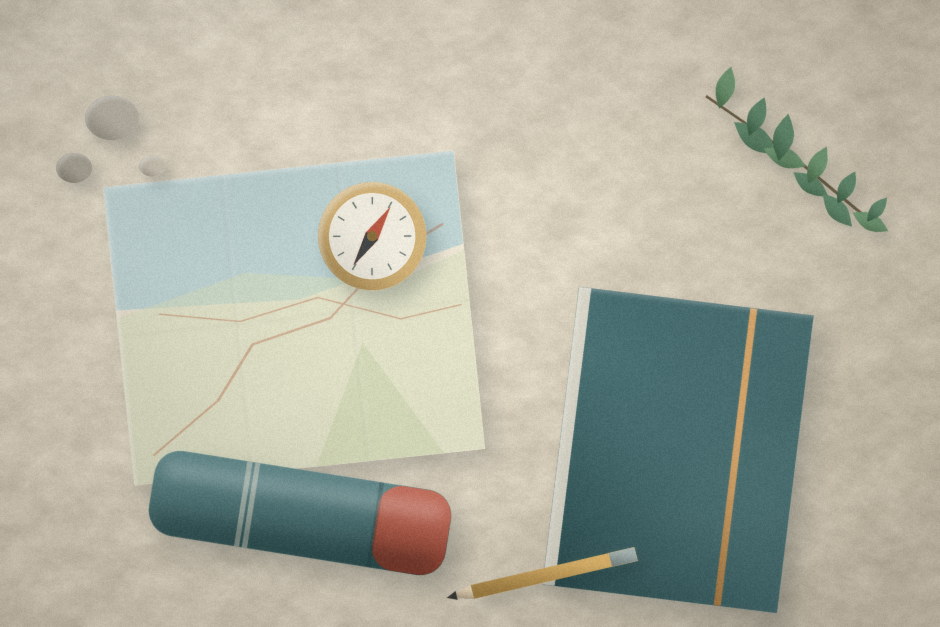
A phone is an excellent map and a poor plan. Batteries fade in the cold, screens fail in rain, and signal is unreliable exactly where it matters. Carry a paper map in a sleeve and a compass you know how to set, and take a photograph of the map before you leave in case both go missing.
Learn one skill rather than five: taking a bearing and following it. That single technique gets you off a featureless plateau in poor visibility, which is the situation where navigation stops being a hobby.
Food that survives the pack
Sandwiches compress, bananas bruise, chocolate melts against your back. Choose things that arrive intact: hard cheese, oatcakes, nuts, dried fruit, a sturdy pastry. Bring more than you plan to eat, because appetite on a cold hill is unpredictable and a spare portion has settled many arguments about turning back.
A thermos is heavier than a water bottle and worth it on any day below ten degrees. Hot tea at a windy col does more for morale than an extra layer, and it gives you a reason to stop and look around properly.
The small things that earn their weight
A head torch, even on a day walk, because a twisted ankle turns four hours into eight. A whistle. A metre of tape wrapped around a trekking pole. Two plasters and a blister patch. A folded bin bag, which becomes a dry seat, a pack liner, or an emergency shelter for your legs.
Add a pencil and a small notebook if you like keeping records. Pens fail in the cold and the wet; a pencil does not, and a note written on the hill is more accurate than one reconstructed that evening.
Pack it the same way every time
Warm layer at the top, food in the lid, map in the hip pocket, first aid in the same corner it always lives in. The point is not tidiness but speed: you can find what you need in wind and rain without unpacking on wet ground, and you can tell at a glance in the hallway whether something is missing.
Weigh it once, honestly
Put the loaded pack on a scale before your next walk. Most people are carrying two or three kilograms they never touch. Take those out, walk the same route, and notice how much longer the good mood lasts. That is the whole argument for a light kit: not speed, but the fact that you are still enjoying yourself at four in the afternoon.